
The Water File
Every Valley listing sits on the same desert, but no two parcels hold the same water. One Arcadia lot carries a flood-irrigation entitlement older than the house; the lot across the street carries none. One North Scottsdale home drinks from a city main backed by a hundred-year designation; another waits for a truck. The difference is rarely in the listing. It lives in records — a service map, a well registry, a septic file — and every one of them can be pulled inside the ten-day inspection period. This is the Water File: five things to verify, what to pull, and who to call. Done early, water is a fact you priced — not a surprise after you are committed.
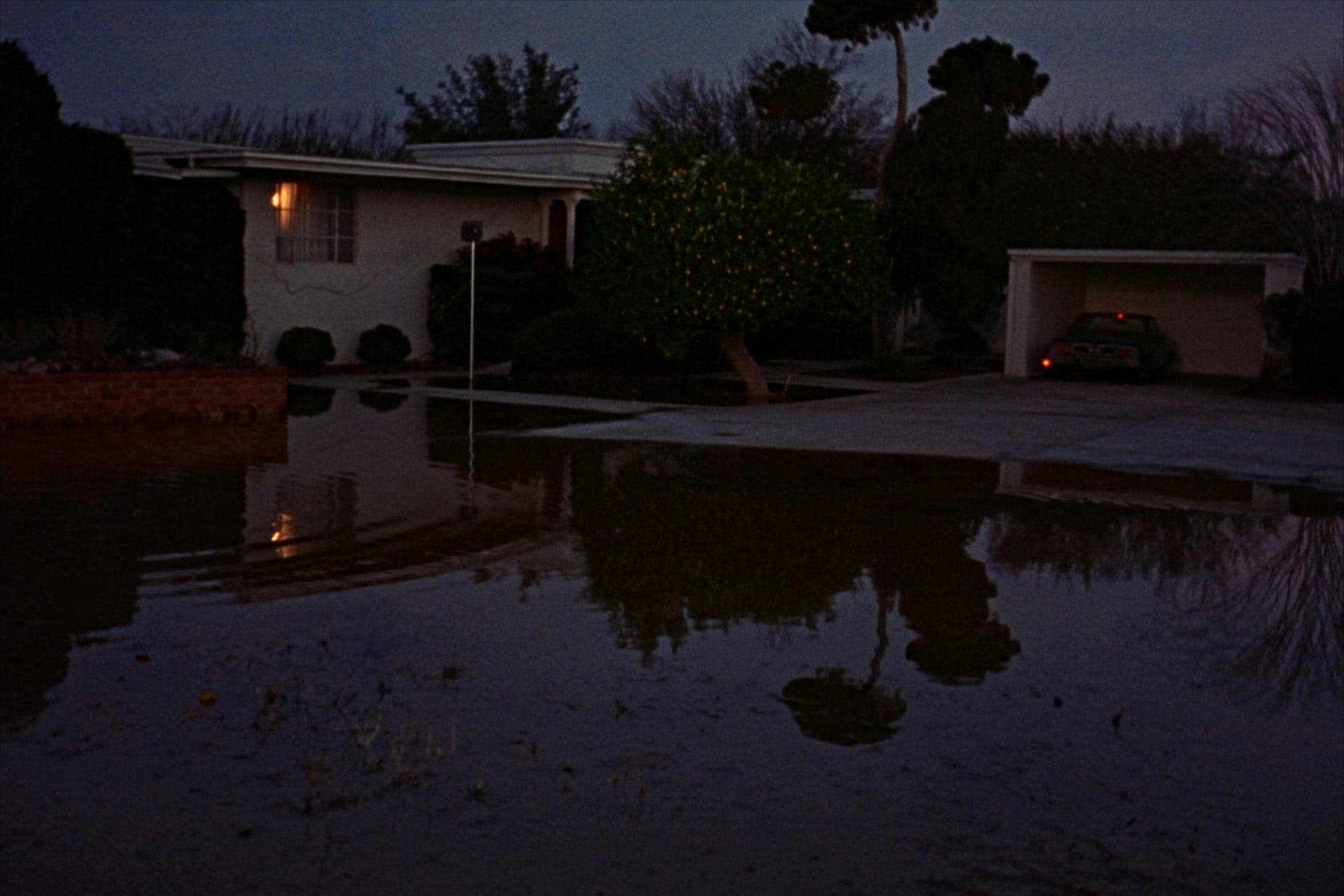
Scarcity here is parcel-specific.
Arizona water runs on rules that are a century deep and still moving — a court unwound part of the state's groundwater policy in April 2026, and a community on the Valley's northeastern edge got its first permanent hauled-water fill station in January 2026. That is why this page works the way a diligence file should: every claim below carries its source and an as-of date, and anything that could not be verified against its named source is not on the page.
None of it requires an expert to start. Each file is a record you can pull and a phone number that answers. The only deadline that matters is the one already running — the inspection period.
Boundaries, not city limits.
The first question is the simplest and the most skipped: who actually serves this parcel? No state agency keeps a parcel-to-provider lookup — ADWR says plainly that it does not maintain records of which parcels draw from which source (ADWR real-estate FAQ, read July 2026). The record is the seller's water bill, and the confirmation is a phone call.
The town that proves the point is Paradise Valley: four providers serve it — Berneil Water Company, City of Phoenix, City of Scottsdale, and EPCOR — and the street determines the provider. The town publishes a provider-boundary map for exactly this reason (Town of Paradise Valley, read July 2026). Which name is on the meter matters beyond the rate schedule: Scottsdale and Phoenix hold ADWR designations of assured water supply; Berneil and EPCOR's Paradise Valley district do not appear on ADWR's designated list (list of October 9, 2025) — and ADWR's own caveat is that designations “do not necessarily coincide with a city or town's corporate limits.”
- 01Pull the bill. The seller's latest water bill names the provider, shows a sewer line item if one exists, and hints at consumption. Ask for twelve months, not one.
- 02Confirm by phone. Scottsdale Water (480) 312-5650 · Phoenix Water (602) 262-6251 · Berneil (480) 966-0115 · EPCOR (800) 383-0834 (numbers per the Town of Paradise Valley, July 2026). In Paradise Valley, put the address on the town's boundary map first.
- 03Note the designation. Whether the provider appears on ADWR's designated-provider list (October 9, 2025) is one line of diligence — and one honest sentence in a resale later.
The water belongs to the dirt.
Arcadia's green is not a landscaping choice — it is a property right. On SRP-eligible land, the water allotment is tied to the parcel itself: it cannot be bought, sold, or transferred separately, and an owner does not pay for the water — only the annual charges that deliver it. When the deed changes hands, the entitlement follows it; SRP charges an $8.10 name-change fee per deed and the account carries on (SRP shareholder information, owner's manual, and fee schedule, read July 2026).
Verification is direct. SRP publishes a service-territory map, and its Water Contact Center — (602) 236-3333, staffed around the clock — will discuss a specific parcel's status. Two traps are worth naming. First, irrigation is independent of the utility bills: a home can buy water from Scottsdale and power from APS and still hold an SRP irrigation entitlement (SRP sign-up page, July 2026). Second, the basic charge is billed whether or not anyone orders water — the base entitlement is two acre-feet per acre, and on SRP's calendar-year 2027 schedule (published March 2026) a one-acre lot runs $440.65 a year all-in, billed each November and due in early December.
- 01Call with the exact address. Ask three things: is there an active irrigation account, what is the parcel's allotment, and are any charges unpaid. Delinquency risks interruption of delivery (owner's manual, July 2026).
- 02Learn the rhythm before you commit to it. Residential deliveries run roughly every 14 days in summer and every 28 in winter, ordered in five-minute increments up to the allotment (SRP sign-up page and owner's manual, July 2026) — flood irrigation is a neighborhood system with scheduled turns, not a tap.
- 03Ask the grandfathered-rights question. Some parcels carry irrigation rights established before 1980 and recognized in 1982 under the Groundwater Management Act; selling one means notifying ADWR at (602) 771-8585 (SRP shareholder page, July 2026). If the listing is that kind of land, the seller should know it.
The drain has a rulebook.
Whether the house drains to a city main or a tank in the yard changes the escrow itself. Arizona rule R18-9-A316 requires the seller of any property served by an on-site wastewater system — conventional septic or an alternative system — to have it inspected by a qualified inspector within six months before the transfer. Maricopa County states the rule “takes precedence over any conflicting terms” in the contract (county Environmental Services, read July 2026). The seller hands the buyer the completed Report of Inspection and every permitting and maintenance document they hold — before close, one report per system.
The buyer inherits one duty that outlasts closing day: filing the Notice of Transfer within 15 calendar days after the transfer — in Maricopa County through the county Permit Center, $50 per parcel. It is a small filing with a deadline that does not care about moving boxes. Put it on the same calendar as the utilities.
Verification starts free: Maricopa County's Online Septic Search returns permitted septic records for a parcel as PDFs at no charge (county portal, confirmed July 2026). A sewered home shows a sewer charge on the utility bill instead — and for those, the sewer-line scope belongs inside the inspection period with the rest of the physical work. A parcel with no septic record and no sewer charge is not a mystery to shrug at; it is a finding to run down before the period ends.
Ariz. Admin. Code R18-9-A316; Maricopa County Environmental Services, Onsite Wastewater Ownership Transfer — read July 16, 2026. ADEQ's statewide pages were offline for maintenance that day; the rule text and county guidance are the basis here.
Private water is private diligence.
Off the municipal grid — the North Scottsdale fringe, Rio Verde, pockets of the far Valley — the water is the buyer's to prove. Start at ADWR's Well Registry and search by parcel. Then trust it only as far as ADWR does: the department itself cautions that registrations can still name owners from decades back, that the map dot is not the well's physical location, and that it cannot guarantee a parcel has no well — “the best way to tell if a parcel has a well is to physically inspect the property” (ADWR real-estate FAQ, read July 2026).
A shared well is a contract, not a utility. ADWR does not regulate shared-well agreements — no state agency does — and disputes between neighbors are resolved in court (ADWR real-estate FAQ, read July 2026). Read the agreement in full during the inspection period — and confirm whether it is recorded: who pays for the pump, who owns the parcel under the wellhead, what happens when one party stops paying. After closing, the new owner updates the well registration with ADWR form 55-71A — $30 per well, filed with the recorded deed, only for wells physically on the purchased parcel.
Hauled water is the farthest edge, and Rio Verde Foothills is its dated case file. Scottsdale stopped supplying outside-city haulers at the end of 2022; a temporary standpipe district carried the community from October 2023 until it dissolved on December 31, 2025; and EPCOR's permanent fill station opened January 1, 2026 — 26788 N 176th Street, 7 a.m. to 6 p.m. daily, account and PIN required (EPCOR, read July 2026). Eligibility is tied to the parcel's APN and transfers to the new owner at sale, but a lot split can change it, and accounts running past twice the median use for two straight months risk disconnection. Buying there means verifying the parcel's standing with EPCOR — (800) 383-0834 — before the inspection period ends, not after.
One hundred years, on paper.
Inside an Active Management Area — all of the Valley is one — new subdivisions must demonstrate a 100-year assured water supply before lots are sold, either through their own certificate or through a commitment from a designated provider (ADWR assured-supply program, read July 2026). Scottsdale and Phoenix are designated; the designation belongs to the provider's service area, not the city limits (ADWR designated list, October 9, 2025).
This is also where the rules are actively moving. ADWR paused new groundwater-reliant certificates after its June 2023 model projected unmet demand; a Maricopa County judge invalidated the policies behind that pause on April 21, 2026, and ADWR has said it intends to challenge the decision (HBACA v. ADWR, Maricopa County Superior Court; ADWR statements, July 2026). As of July 2026 the fight is unresolved — which is precisely why this page carries dates.
What it means at the kitchen table: a resale buyer on designated city water is not what that litigation is about. A buyer of a lot, a new build on the fringe, or a home on an undesignated private system should ask one precise question — which instrument covers this parcel's hundred years, a certificate or a designated provider's written commitment — and get the answer in writing. ADWR's assured-supply office answers at (602) 771-8599.
The Water File, on one page.
The file reduces to five records and five phone numbers. Print this section and work it top to bottom inside the inspection period — it is built to be finished in days, not weeks.
Phone numbers and processes as published by SRP, ADWR, Maricopa County, and the Town of Paradise Valley — read July 16, 2026. Rules and fees change; the sources below are the place to re-check.
Asked at the kitchen table.
Check the address against SRP's irrigation service-territory map, then call the SRP Water Contact Center at (602) 236-3333 — it answers 24 hours a day — and ask about the parcel's account status and allotment. Irrigation is separate from the water and power bills: a home can buy its drinking water from the city and still hold an SRP irrigation entitlement. The right belongs to the land and passes with the deed. Per SRP's published irrigation pages, read July 2026.
Yes — when the property is served by one. Under Arizona Administrative Code R18-9-A316, the seller of a property served by a septic or other on-site wastewater system must have it inspected by a qualified inspector within six months before the transfer, and Maricopa County states the rule takes precedence over any conflicting contract terms (county Environmental Services, read July 2026). The buyer then files a Notice of Transfer within 15 calendar days after closing — in Maricopa County through the county Permit Center, with a $50 fee per parcel.
Pull the parcel through Maricopa County's free Online Septic Search — permitted septic systems appear as PDF records (county portal, July 2026). Cross-check the seller's utility bill: a sewer charge means the city believes it is sewered. If neither shows a clear answer, treat that as a finding, not a blank — no record is itself something to run down before the inspection period ends.
Some homes on the Valley's edge have no water line at all — water arrives by truck into an on-site storage tank. Rio Verde Foothills is the cautionary file: Scottsdale stopped supplying outside-city haulers at the end of 2022, a temporary standpipe district carried the community from late 2023 until it dissolved on December 31, 2025, and EPCOR's permanent fill station opened January 1, 2026. Access now requires an approved account tied to the parcel — eligibility transfers to a new owner at sale, but a lot split can change it. Verify the specific parcel's standing with EPCOR before the inspection period ends.
After closing, the new owner files ADWR form 55-71A — Request to Change Well Information — with a $30 fee per well, a copy of the recorded deed, and a map marking the well on the parcel (ADWR, July 2026). It is filed after transfer, not before, because the deed must be attached. Before that, during the inspection period, search the parcel in ADWR's Well Registry and read any shared-well agreement in full: ADWR does not regulate those agreements, and disputes between neighbors end up in court, not at an agency.
The City of Scottsdale holds an ADWR designation of assured water supply — as does Phoenix — per the department's designated-provider list dated October 9, 2025. A designation is ADWR's determination that the provider can meet a century of anticipated demand. It attaches to the provider's service area, not to the city limits, and the list changes. The buyer's question is narrower and checkable: is this specific parcel actually served by the designated system?
Where every claim on this page lives.
Each source below was read directly on July 16, 2026, and every factual claim above traces to one of them. Arizona water rules move — when a date here ages, the source is the place to confirm the current rule.
- 01SRP. Flood-irrigation sign-up & territory map; Residential Irrigation Owner's Manual; CY2027 residential water charges (published March 2026); water-shareholder information.
- 02Septic. Ariz. Admin. Code R18-9-A316; Maricopa County onsite-wastewater ownership transfer; county Online Septic Research portal.
- 03Wells. ADWR FAQ for real-estate & title agents; ADWR Well Registry; form 55-71A.
- 04Assured supply. ADWR assured & adequate water supply overview; designated-provider list, Oct. 9, 2025; Phoenix AMA model updates; HBACA v. ADWR, Maricopa County Superior Court, ruling of April 21, 2026.
- 05Providers & hauled water. Town of Paradise Valley water companies; EPCOR Rio Verde Foothills fill station (opened Jan. 1, 2026).
This guide describes public verification channels in general terms. It is educational content — not legal advice, not hydrology, and not a substitute for the advice of an Arizona attorney or a qualified inspector on a specific property. Derek Deardorff is a licensed Arizona real estate salesperson, not an attorney.
Verified against the sources above on July 16, 2026. This page is re-reviewed when the rules it cites change — the April 2026 groundwater litigation makes that a matter of when, not if.
The Water File is a week of phone calls the first time and a habit after that. If the house you want carries water questions — an irrigation entitlement, a tank in the yard, a truck in the driveway — walk the file before the offer is written, not on day nine.
Goes directly to Derek. No marketing list. One reply.